Heading out from Oakville this summer? A few simple maintenance steps before you leave can meaningfully reduce how much fuel your Toyota burns on the way to Muskoka, Niagara, the cottage, or wherever the season takes you. None of these require advanced mechanical knowledge.
Just the right checks at the right time, and a quick visit to Oakville Toyota if anything needs attention.
Book Service Appointment
Here are five maintenance-focused actions that directly improve fuel economy before and during a summer road trip.
1. Check Tire Pressure and Condition

Tire pressure is one of the easiest fuel-economy wins available to any driver. Under-inflated tires create more rolling resistance, which means the engine works harder to maintain speed. Every 1 psi drop in pressure can reduce fuel economy by roughly 0.2%, and properly inflated tires can improve it by up to about 3% compared to tires running low.
Check your pressures when the tires are cold, before driving or within a few kilometres of home. Use the figure on the driver's door jamb sticker, not the maximum pressure printed on the tire sidewall, which is a different measurement entirely. While you are at it, do a quick visual on all four tires for uneven wear, cracks, or sidewall bulges. Tires in poor condition affect both safety and efficiency on a loaded highway drive.
2. Keep the Engine Breathing Properly
A clean engine air filter lets the engine pull in the air it needs for efficient combustion. A clogged filter restricts that airflow, which can hurt both fuel economy and acceleration. Both show up clearly over hundreds of highway kilometres. If your filter has not been inspected recently, it is worth having the team at Oakville Toyota take a look before you leave.
While you are on the topic of engine health, confirm whether your Toyota is due for a spark plug replacement. Worn spark plugs cause incomplete combustion. The fuel does not burn as cleanly as it should, which wastes fuel and can produce rough running over a long trip. Keeping up with Toyota's scheduled maintenance intervals is the straightforward way to avoid this.
3. Use the Right Oil and Stay on Top of Fluid Service

The engine oil grade recommended in your Toyota owner's manual is there for a reason. Using the correct viscosity grade reduces internal friction and helps the engine run efficiently. Using a heavier grade than specified, particularly in summer heat, can actually increase fuel consumption slightly rather than reducing it.
If you are approaching your next oil change interval, do it before the trip. Fresh oil handles heat better and protects engine components more effectively under the sustained load of highway driving. Beyond oil, a pre-trip fluid check - coolant, transmission fluid, brake fluid, and power steering fluid where applicable - keeps all systems operating as designed and prevents inefficiency from low or degraded fluids.
4. Reduce Excess Weight and Drag
Every kilogram your Toyota carries on the highway is weight the engine has to move, and over a long trip, extra weight adds up to extra fuel. Before packing, go through the vehicle and remove anything that does not need to make the trip: sports equipment stored in the trunk year-round, extra tools, seasonal items left behind from winter.
Aerodynamic drag has a similar effect, and roof racks or cargo carriers are among the biggest culprits. An empty roof rack adds drag even with nothing loaded on it. If you are not using the rack for this trip, removing it before you leave is a straightforward way to improve highway fuel economy. At highway speeds, the aerodynamic penalty from an empty rack is larger than most drivers expect.
5. Be Smart with Air Conditioning and Driving Habits
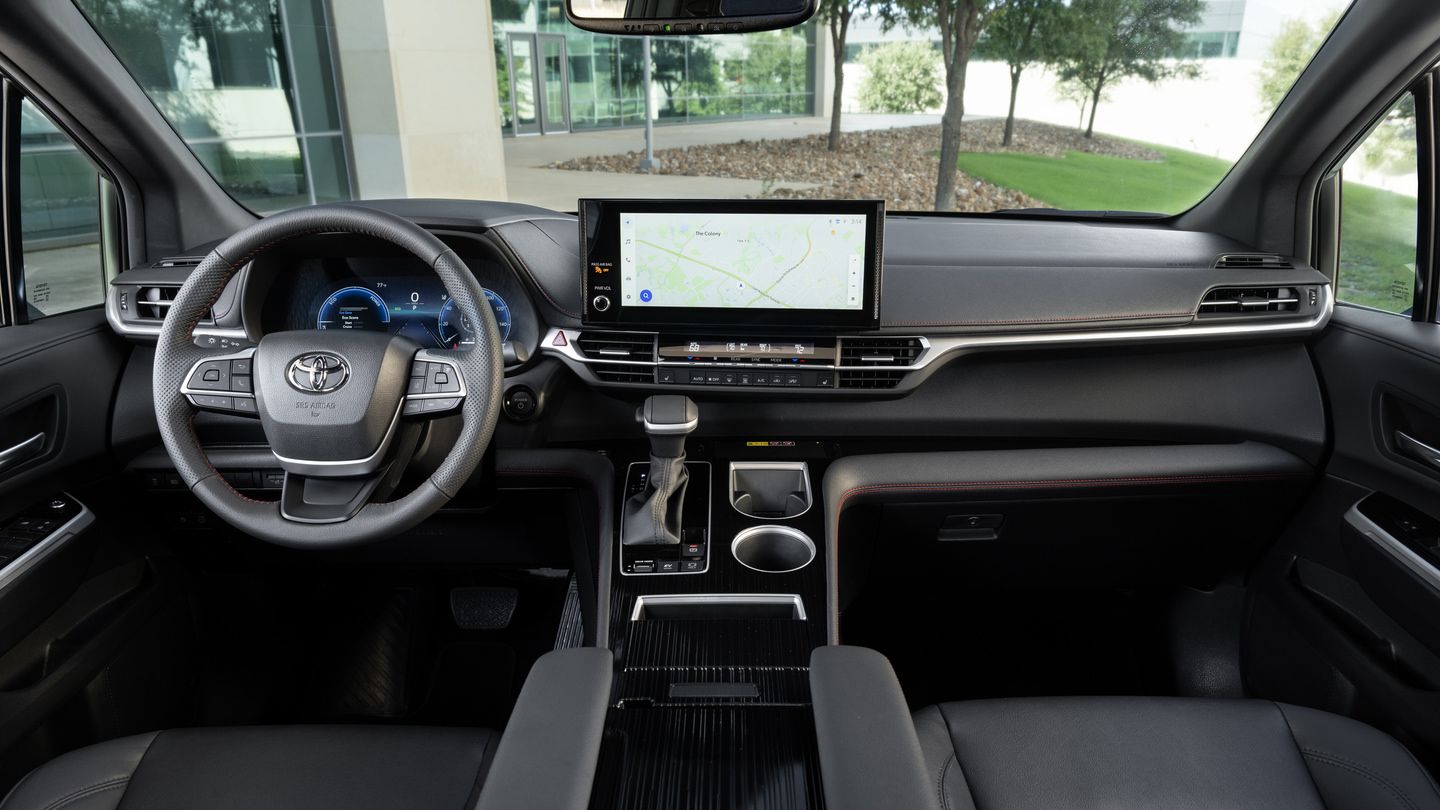
Air conditioning puts a real load on the engine - on hot Ontario summer days it can noticeably increase fuel consumption, particularly in stop-and-go traffic. At lower speeds, keeping windows down is often more efficient than running the A/C. At highway speeds, however, the drag created by open windows typically outweighs the A/C load, so closing windows and using the air conditioning is usually the better choice above about 80 km/h.
Driving habits have an equal or greater effect on fuel economy than any of the mechanical items above. Smooth acceleration, early braking, and maintaining steady speeds on the highway all reduce consumption. On clear stretches of highway, cruise control takes the guesswork out of speed management and keeps the engine running at a consistent, efficient load rather than surging and settling with driver input. Aggressive acceleration from stops and speeds well above the posted limit are two of the fastest ways to watch fuel economy drop.
A Pre-Trip Visit to Oakville Toyota Covers All of This
The service team at Oakville Toyota can check tire pressures and condition, inspect the air filter and fluids, confirm your oil is fresh and the correct grade, and flag anything else that might affect efficiency or reliability on the road. A multi-point pre-trip inspection is the most efficient way to work through this list before heading out into Southern Ontario's summer driving season.
Book your service appointment at Oakville Toyota and head out with your fuel economy working in your favour from the first kilometre.
You might also be interested in these blogs: